What Is Rolfing? A Certified Rolfer Explains Structural Integration
Rolfing is a form of hands-on bodywork that focuses on how the body is organized, how it moves, and how different parts of the body work together. Its also known as Structural Integration and it combines fascial bodywork with movement awareness to help people explore greater ease, mobility, and balance in their bodies.
Having practices for 12+ years I’ve seen people seek Rolfing for many reasons. Some experience persistent tension, back discomfort, or restricted movement either for work or chronic use or old injury. Others want to improve their posture, feel less restricted in their daily activities, or develop a better understanding of how they use their bodies.
Unlike approaches that focus primarily on a single painful muscle or area, Rolfing takes a whole-body perspective or at least it is how I practice. My goal is to understand how different areas relate to one another and how those relationships influence the way a person stands, walks, breathes, and moves.
What Is Rolfing Structural Integration?
Rolfing Structural Integration was developed by Dr. Ida P. Rolf, a biochemist who explored the relationship between the body's connective tissues, movement, and the influence of gravity. Her work developed into a systematic approach to bodywork that considers the body as an interconnected whole rather than a collection of separate parts.
A central idea in Rolfing is that the body continually adapts to its experiences. Repetitive movements, prolonged sitting, physical activity, injuries, and everyday habits can all influence how we hold ourselves and move through the world.
Over time, some movement patterns can become habitual. Perosonally you might notice that one shoulder tends to sit higher or that standing for long periods feels tiring, or that your body seems to work harder than necessary during ordinary movements.
Rolfing explores these patterns through hands-on work, observation, and movement awareness. Rather than trying to force the body into a single ideal posture, the process aims to help it find more adaptable and efficient ways of organizing itself.
How Does Rolfing Work With Fascia?
Fascia is the connective tissue network that surrounds and connects muscles and other structures throughout the body. It provides support, helps transmit forces between tissues, and contributes to the body's sensory awareness.
Because this network extends throughout the body, tension or restricted movement in one area may influence how other areas function. For example, a person experiencing discomfort around the shoulders may also have movement restrictions through the rib cage, spine, or pelvis that are worth exploring.
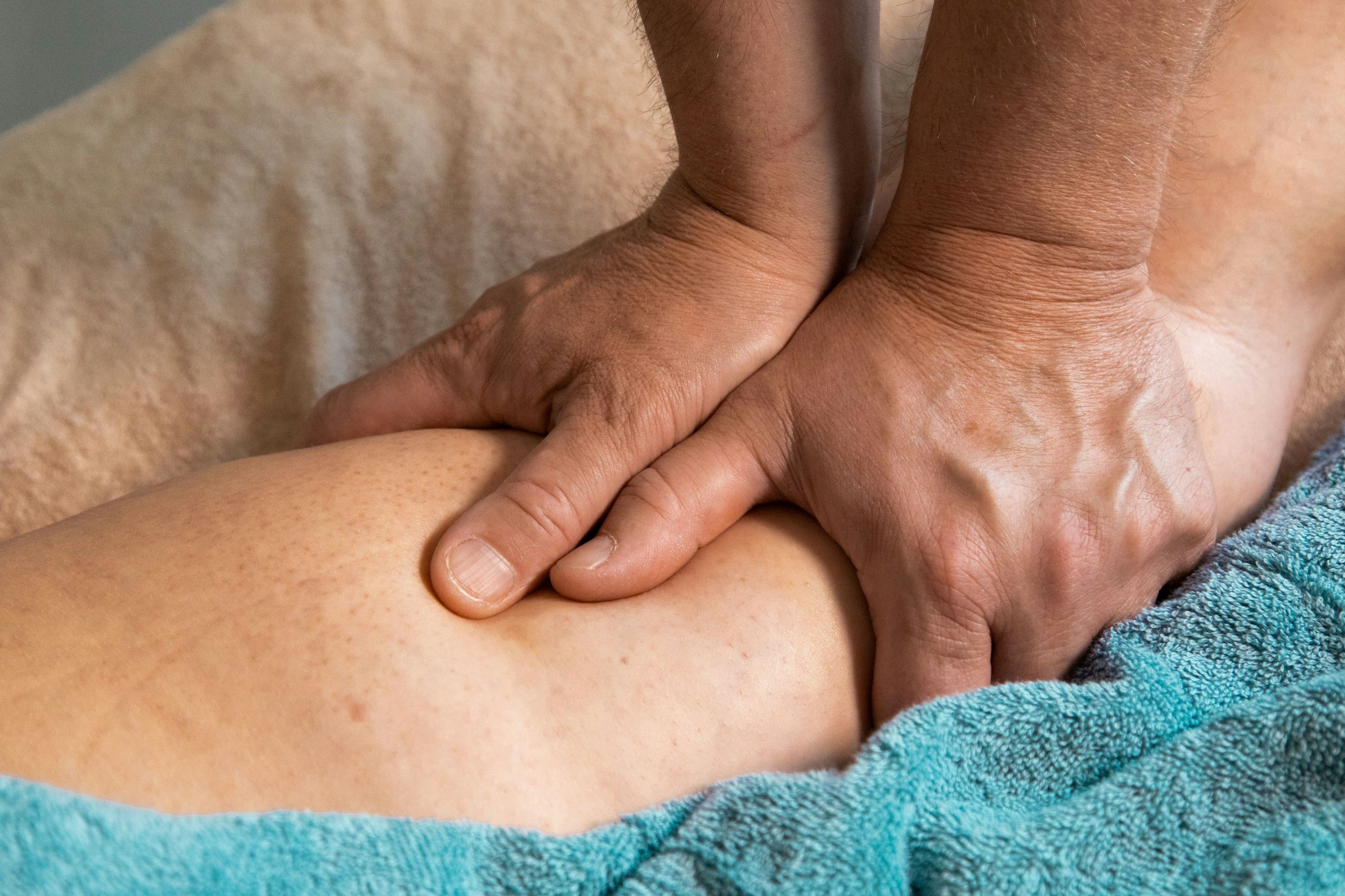
Being a rolfer I use skilled, hands-on contact to work with the fascial system and surrounding soft tissue areas and adjust the pressure, direction, and pace of the work in response to the individual and the tissues being addressed.
The work may be gentle and subtle or more direct, depending on what is appropriate for the session. More pressure does not automatically mean better results.
Movement is also an important part of the process I incoporate. I commonly invite my clients to breathe, turn their head, reach an arm, shift their weight, or notice how their feet meet the ground. These simple movements help bring attention to habitual patterns and allow people to explore different ways of moving.
The intention is not simply to work on tissue, but to help changes in comfort and movement become meaningful in everyday life.
What Happens During a Rolfing Session?
A Rolfing session typically begins with a conversation about what brings you in, what you have been experiencing, and what you would like to change. Sometimes I observe how you stand, walk, or perform a few simple movements.
This initial observation helps establish a starting point. Ive seen two people who may arriveto me with similar complaints but have completely different movement patterns, histories, and needs. My styleis adapted to the individual rather than applied as an identical routine to everyone.
Throughout the process, communication matters. Your feedback helps me adjust the work, and your own awareness helps you notice changes in how you feel and move.
Most people notice an immediate difference in comfort, posture, or ease of movement. For some that I’ve seen the results can be night and day. For others, changes develop gradually over multiple sessions. Each person's experience is different.
Rolfing vs. Massage: What's the Difference?
Rolfing and massage both involve hands-on work with the body's soft tissues, and the two can sometimes feel similar. However, their overall approaches and goals can differ.
Massage is often sought for relaxation, temporary relief from muscular tension, recovery after physical activity, or focused work on areas that feel tight or tired. Many forms of massage emphasize local comfort and relaxation, although some also incorporate movement and broader bodywork techniques.
Rolfing takes a more systematic approach to the relationships between different areas of the body. A session may address a region that does not appear to be directly related to the discomfort a person initially describes.
For example, someone who feels restricted through the lower back may also have limitations in the hips, legs, rib cage, or breathing patterns. As a rolfer I consider these relationships when deciding how to approach the session.
The distinction is not that one method is universally better than the other. They offer different approaches, and the right choice depends on your goals, preferences, and what kind of work you are looking for.
Although people sometimes search for “Rolfing massage,” the more accurate name for the method is Rolfing Structural Integration.
Who Seeks Rolfing, and What Can It Help With?
People from many backgrounds seek Rolfing. Some spend long hours sitting at a desk, while others are physically active and want to move with greater freedom. Some are interested in posture and body awareness, while others are looking for a different approach to recurring tension or discomfort.
Common reasons people explore Rolfing include:
Persistent muscular tension and feelings of restriction.
Back, neck, or shoulder discomfort.
Postural habits associated with work or daily activities.
Limited mobility or difficulty moving comfortably.
Greater awareness of breathing, balance, and coordination.
Support for maintaining ease of movement during exercise and other physical activities.
Rolfing is not about making every body look the same or correcting every perceived imperfection. Bodies differ in their structure, history, and needs. The focus is on helping each person explore movement options that feel more comfortable, coordinated, and sustainable.
Results vary, and Rolfing is not a guaranteed solution for every source of pain or movement limitation. It is a hands-on approach that can be explored as part of a broader commitment to physical well-being.
What Is the Rolfing Ten Series?
The Rolfing Ten Series is a structured sequence of ten sessions developed by Ida Rolf. Each session has a general focus, and the work builds progressively to explore the relationships between different regions of the body.
The first three sessions generally emphasize the body's more superficial fascial relationships and areas involved in breathing, support, and overall organization. Sessions four through seven explore deeper relationships involving the legs, pelvis, trunk, neck, and head. The final three sessions emphasize integration, helping different parts of the body work together more effectively.
The Ten Series is not simply ten repetitions of the same treatment. Each session builds on the work that came before it, with the intention of developing a more integrated understanding of the body as a whole.
Some people choose to complete the full series because they appreciate its systematic approach. Others begin with individual sessions to explore Rolfing and determine whether it fits their needs. The appropriate approach depends on the person, their goals, and the practitioner's assessment.
Being a Certified Rolfer in Los Angeles and Orange County
As a Certified Rolfer I’ve completed the professional training in Rolfing Structural Integration, in Boulder, Colorado. Thisincluding anatomy, movement, hands-on techniques, structural assessment, and the principles of the Ten Series.
I listen carefully and explain my approach, and then adapt the work to your comfort level and goals. We engage in a collaborative process in which you can communicate openly about your experience.
For people looking for Rolfing in Los Angeles, areas such as Silver Lake, Atwater Village, Los Feliz, Echo Park, and surrounding neighborhoods I’m rather close right in your neighborhood. In Orange County, Im super close Irvine, Costa Mesa, Newport Beach, Laguna Beach, and Aliso Viejo.
Whether your interest is posture, fascial bodywork, mobility, or a more integrated approach to movement, understanding the method can help you decide whether Rolfing is right for you.
My practice with Rolfing offers a way to explore the body through touch, movement, and awareness. I look beyond isolated areas of tension and consider how the body works as a whole, in all ways, and invite a different relationship with posture, movement, and the physical habits that shapes yout everyday life.